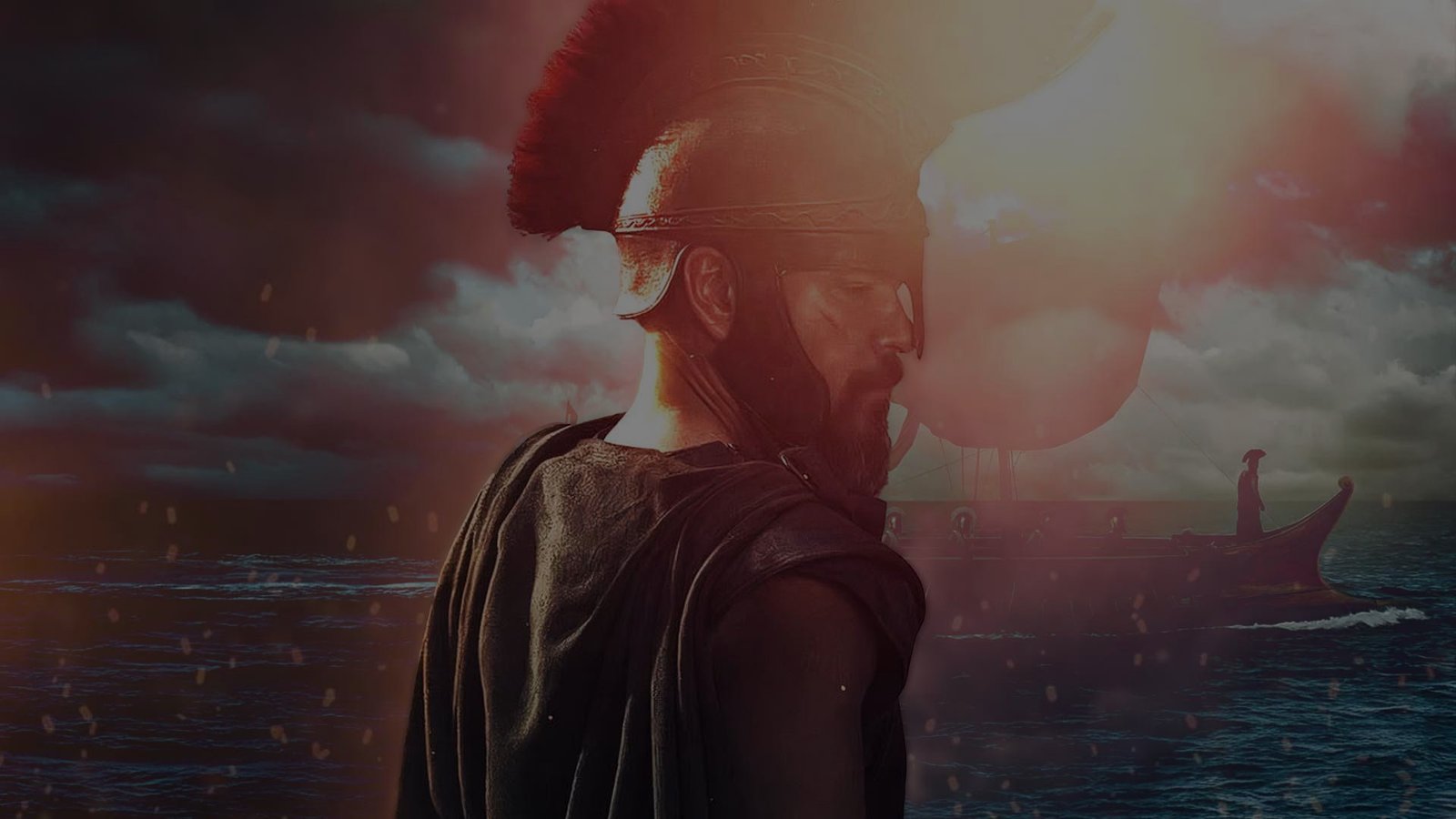
Following the enormous success of Oppenheimer (2023), executive Christopher Nolan is turning his attention to one of the greatest stories ever told—The Journey. Set for release in July 2026, this driven film marks Nolan’s first full-fledged plunge into classical mythology, reimagining Homer’s ageless epic for a modern era. With a detailed $250 million budget, an enormous cast, and cutting-edge IMAX film technology, The Journey is shaping up to be one of the most expected cinematic events of the decade.
Background and Source Material
Homer’s The Odyssey is one of the foundational works of Western writing, composed around the 8th century BCE. The lyric chronicles the risky travel of Odysseus, the clever Greek legend, as he battles to return home to Ithaca after the Trojan War. Along the way, he experiences gods, creatures, and temptations that test his quality, intellect, and resolve.
Meanwhile, his spouse Penelope and child Telemachus confront challenges of their position as suitors endeavor to seize Odysseus’s throne. The sonnet is not, as it were, an experience but, moreover, a significant reflection on devotion, diligence, and the human longing for domesticity. Nolan’s film adjustment promises to protect these subjects while showing them through his signature cinematic fashion fantastic, immersive, and intellectually layered.

The Director’s Vision
Christopher Nolan has built a notoriety for combining display with philosophical depth. From Initiation to Interstellar, his movies often investigate time, memory, and ethical complexity. The Journey gives a perfect canvas for him to consolidate mythic narrating with his interest in human strength and destiny.
Reports recommend Nolan’s adaptation will center on the mental and emotional travel of Odysseus as much as the physical one. Or maybe, rather than essentially duplicating legendary occasions, the film is anticipated to reinterpret them, utilizing visual and account metaphors to investigate ageless questions about character, bravery, and the fetch of ambition.
Nolan has portrayed the extent as a “mythic activity epic shot totally with IMAX film cameras,” signaling that audiences can anticipate both endless scale and hinted detail, a trademark of his work.
Cast and Crew
The film boasts one of the most impressive casts amassed in later years:
- Matt Damon stars as Odysseus, checking his third collaboration with Nolan after Interstellar and Oppenheimer.
- Zendaya and Tom Holland are rumored to depict key parts, conceivably as Telemachus and a divine figure directing Odysseus.
- Anne Hathaway, Charlize Theron, Robert Pattinson, and Lupita Nyong’o are also joined, each bringing star control and dramatic gravitas to the project.
Behind the camera, Nolan reunites with cinematographer Hoyte van Hoytema, whose past work with him has reimagined the conceivable visual outcomes of IMAX filmmaking. Their organization guarantees a breathtaking mix of real-world scenes, viable impacts, and sweeping imagery that transports audiences into old myth.
Production and Cinematic Scale
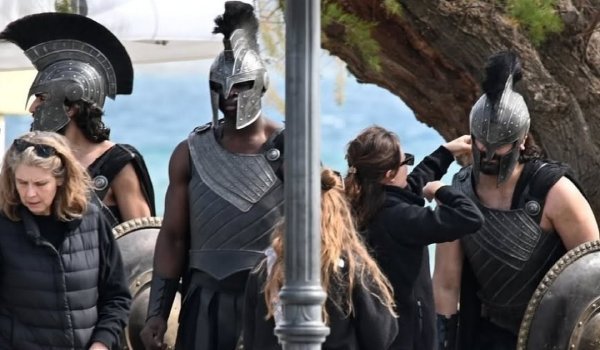
Filming for The Journey ranges across different landmasses, including areas in Greece, Italy, Iceland, Morocco, and Scotland. This worldwide approach mirrors Odysseus’s travel overseas and bizarre lands, establishing legendary events in genuine, substantial environments.
What genuinely sets this generation apart is Nolan’s choice to shoot totally on IMAX film, a mechanical medium to begin with for cinema. IMAX’s ultra-high determination and broad outline will permit watchers to experience the magnificence of the antiquated world in uncommon clarity and immersion.
Nolan’s inclination for viable impacts and real-world stunts too implies audiences can anticipate awe-inspiring visuals without overreliance on CGI. Early reports show that fantastic sets, handcrafted ships, and characteristic lighting will overwhelm the film’s taste, lending realness and surface to the old myth.
Themes and Story Expectations
At its center, The Journey is a story of perseverance and change. Whereas the account system will likely take after Homer’s unique structure—Odysseus’s domestic travel and the trials he faces Nolan’s adjustment is anticipated to highlight a few enduring themes:
The Nature of Bravery Odysseus is not a faultless warrior but a complex, imperfect man whose cleverness regularly borders on hubris. Nolan is likely to explore the pressure between bravery and arrogance, as he has done with numerous of his protagonists.
Given Nolan’s interest with nonlinear narrating, The Journey might play with time, showing the hero’s experiences as parts of memory, dream, or myth.
More than a physical return, Odysseus’s travel speaks to an all-inclusive yearning for having a place and peace. Nolan might outline Ithaca not as a goal but as a state of intellect, a metaphor for reason in a dubious world.
The Divine and the Human The transaction between gods and mortals is central to Homer’s story. Nolan may reimagine divine intercession in more mental or typical terms, centering on inward struggle and destiny rather than unmistakable supernatural spectacle.
What Makes This Adjustment Unique
While The Journey has been adjusted numerous times sometime recently—from classical arranged plays to the 1997 miniseries and indeed advanced reinterpretations like O Brother, Where Craftsmanship Thou?— Nolan’s form stands separated in a few ways:
- Scale and Realness: Few executives nowadays are willing to mount a generation of this size with commonsense filmmaking. Nolan’s request for genuine areas and large-format cameras guarantees a material, immersive experience.
- Star Control: The Gathering cast brings both box office appeal and sensational validity, guaranteeing the film resounds with standard and arthouse groups of onlookers alike.
- Intellectual Profundity: Nolan’s narrating frequently obscures the line between myth and logic. Anticipate the journey to be as much around the human intellect as it is almost divine beings and monsters.
- Cinematic Development: By spearheading a modern era of IMAX innovation, Nolan might rethink how legendary movies are experienced in theaters.
Anticipation and Social Impact
Excitement for The Journey is, as of now, at a fever pitch. Progress IMAX ticket deals have supposedly sold out in select markets a year or some time recently. Pundits and fans alike anticipate the film to thrust the boundaries of what legendary cinema can achieve.
If fruitful, The Journey seems to reignite intrigue in classical stories, clearing the way for a modern wave of myth-inspired sagas. It may, moreover, fortify Nolan’s position as one of the few producers competent of wedding mental narrating with large-scale exhibition. For understudies, teachers, and fans of writing, the film might end up being a bridge between the antiquated and the cutting edge—a reintroduction of Homer’s world to the computerized age.
Challenges and Expectations
Adapting the journey is not without dangers. The poem’s verbose structure, wide cast of characters, and extraordinary components make it troublesome to condense into a cohesive account. Adjusting mythic greatness with passionate closeness will be essential.
Moreover, groups of onlookers presently anticipate Nolan to provide both display and complexity. If the film inclines as well intensely on one, it might estrange a portion of his fanbase. However, if anybody can meet that challenge, it’s Nolan—a chief known for blowing the limits of narrating and innovation alike.
Conclusion
As expectation builds for its July 2026 discharge, The Journey stands balanced to end up as one of the characterizing movies of the decade. With its combination of classical narrating, present-day filmmaking advancements, and all-inclusive human topics, it is guaranteed to be more than a fair adjustment—it seems to be a cinematic journey in itself.
Whether it eventually remains loyal to Homer’s vision or rehashes it completely, Nolan’s The Journey is set to remind gatherings of people why a few stories endure forever: since they talk to the substance of what it implies to travel, to battle, and to come home.
Frequently Asked Questions (FAQs)
1. Who is coordinating The Journey (2026)?
The film is coordinated by Christopher Nolan, known for Beginning, Dunkirk, Interstellar, and Oppenheimer.
2. Who plays Odysseus?
Matt Damon stars as Odysseus, marking another collaboration with Nolan.
3. What is the discharge date for The Odyssey?
The film is planned for showy discharge on July 17, 2026.
4. What is the motion picture based on?
It is an adjustment of Homer’s antiquated Greek epic sonnet The Journey, which takes after the legend of Odysseus’s ten-year domestic travel after the Trojan War.
5. Is this an advanced or old setting?
While correct points of interest are a mystery, Nolan’s form supposedly remains set in an antiquated or mythic time, shot in bona fide verifiable locations.
6. Will it be shot in IMAX?
Yes. The motion picture is being shot totally utilizing IMAX film cameras—a first in cinema history.
7. What subjects will the film explore?
Expect topics of courage, homecoming, time, memory, destiny, and the human battle against divine and characteristic forces.
9. What is the budget of the film?
The generation budget is assessed at around $250 million, making it one of Nolan’s most driven projects.
10. Why is there so much anticipation?
Because it consolidates one of the most noteworthy stories ever told with one of the most visionary producers alive—promising an exceptional cinematic experience.